
The Canary Islands, with their idyllic climate and stunning landscapes, are often described as a paradise on Earth. However, like all paradises, they have their quirks. One such quirk is the weather phenomenon known as “calima.” This meteorological event, characterized by a hot, dry, and dusty wind, can dramatically affect the islands’ weather and environment. In this blog post, we’ll explore what calima is, why it occurs, and how it impacts life in the Canary Islands.
What is Calima?
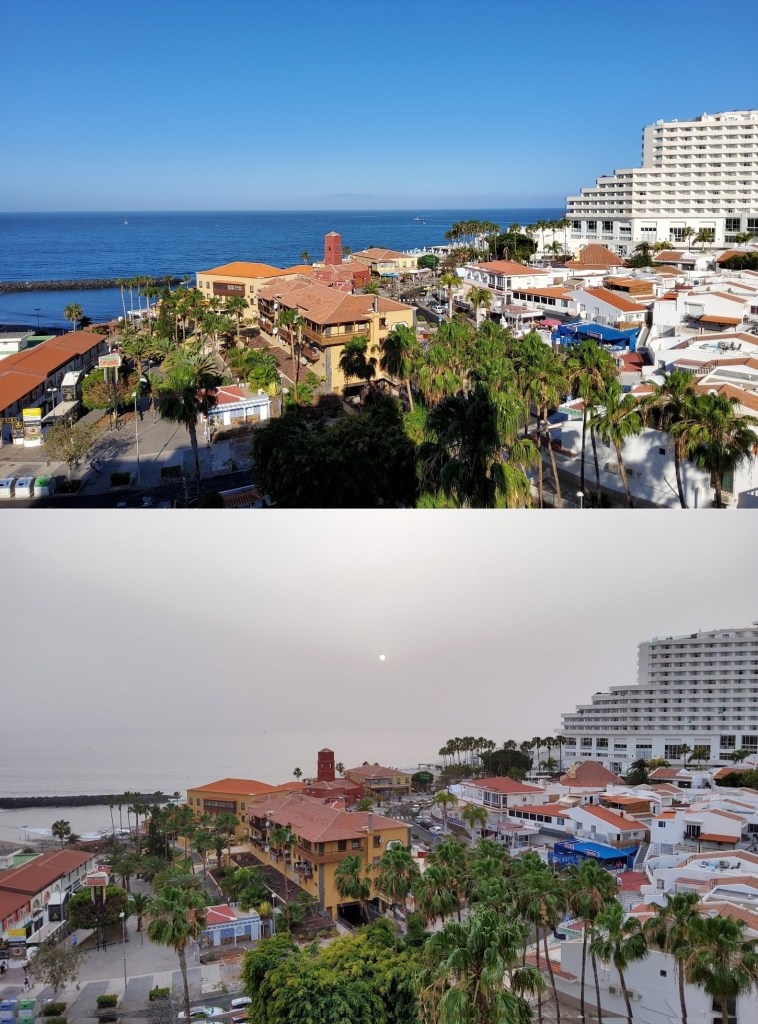
Calima is a weather phenomenon that occurs when strong winds carry dust and sand from the Sahara Desert over to the Canary Islands. This results in a noticeable haze in the atmosphere, significantly reducing visibility and often bringing a sudden increase in temperatures. The air becomes dry and laden with fine particulate matter, which can affect air quality and health.
Why Does Calima Occur?
Calima is primarily caused by the movement of air masses from the African continent. When high-pressure systems develop over the Sahara Desert, they can push hot, dusty air westward towards the Canary Islands. This typically happens several times a year, with varying intensity and duration.
The Impact of Calima
1. Health Effects
The fine dust particles carried by calima can pose health risks, particularly for individuals with respiratory conditions such as asthma or chronic bronchitis. The dry, dusty air can irritate the eyes, throat, and lungs, causing discomfort even for those without pre-existing conditions. It’s advisable to stay indoors, use air purifiers, and keep hydrated during periods of intense calima.
2. Environmental Impact
Calima can also have a significant impact on the environment. The fine dust particles can cover surfaces, including solar panels, reducing their efficiency. Agricultural activities can be affected as well, with dust settling on crops and potentially impacting their growth and yield. The phenomenon can also disrupt local ecosystems, albeit temporarily.
3. Visibility and Travel
One of the most immediate and noticeable effects of calima is the reduction in visibility. The dense dust can obscure views, making driving hazardous and disrupting air travel. Airports in the Canary Islands may experience delays or cancellations during severe calima events due to poor visibility.
Experiencing Calima: What to Do
If you find yourself in the Canary Islands during a calima, here are some tips to stay safe and make the most of your experience:
- Stay Informed: Keep an eye on local weather forecasts and advisories. The Canary Islands’ meteorological agency often provides updates and warnings when calima is expected.
- Protect Your Health: Limit outdoor activities, especially strenuous exercise. Use air purifiers indoors and consider wearing a mask if you need to go outside.
- Stay Hydrated: The dry air can lead to dehydration, so drink plenty of water.
- Capture the Unique Atmosphere: While calima can obscure clear views, it also creates a unique, ethereal light that can make for interesting and dramatic photographs. Use this opportunity to capture the surreal landscapes.

The Silver Lining
Despite its challenges, calima is a natural part of life in the Canary Islands and contributes to the islands’ unique climate and biodiversity. The dust from the Sahara carries minerals that can enrich the soil, providing nutrients that benefit local vegetation. Additionally, the phenomenon adds to the rich tapestry of experiences that make the Canary Islands such a fascinating destination.
Calima is a reminder of the dynamic and interconnected nature of our planet’s weather systems. While it can pose challenges, understanding and preparing for calima can help mitigate its impacts. For those visiting the Canary Islands, experiencing calima firsthand offers a glimpse into the natural forces that shape this beautiful archipelago. So, next time you find yourself enveloped in the dusty embrace of a calima, remember to stay safe, stay curious, and appreciate the unique beauty of this weather phenomenon.
 Canary Islands